Denver · Heat and calibration
Checking a Viking Oven Against a Thermometer
When a cavity and a recipe stop agreeing, what we usually find is a drift measured in a few degrees a year rather than a fault that arrived overnight. The oven still lights, still preheats and still browns; it simply settles somewhere other than the figure on the dial, and a thermometer on the centre rack is the only thing in the kitchen able to say so.
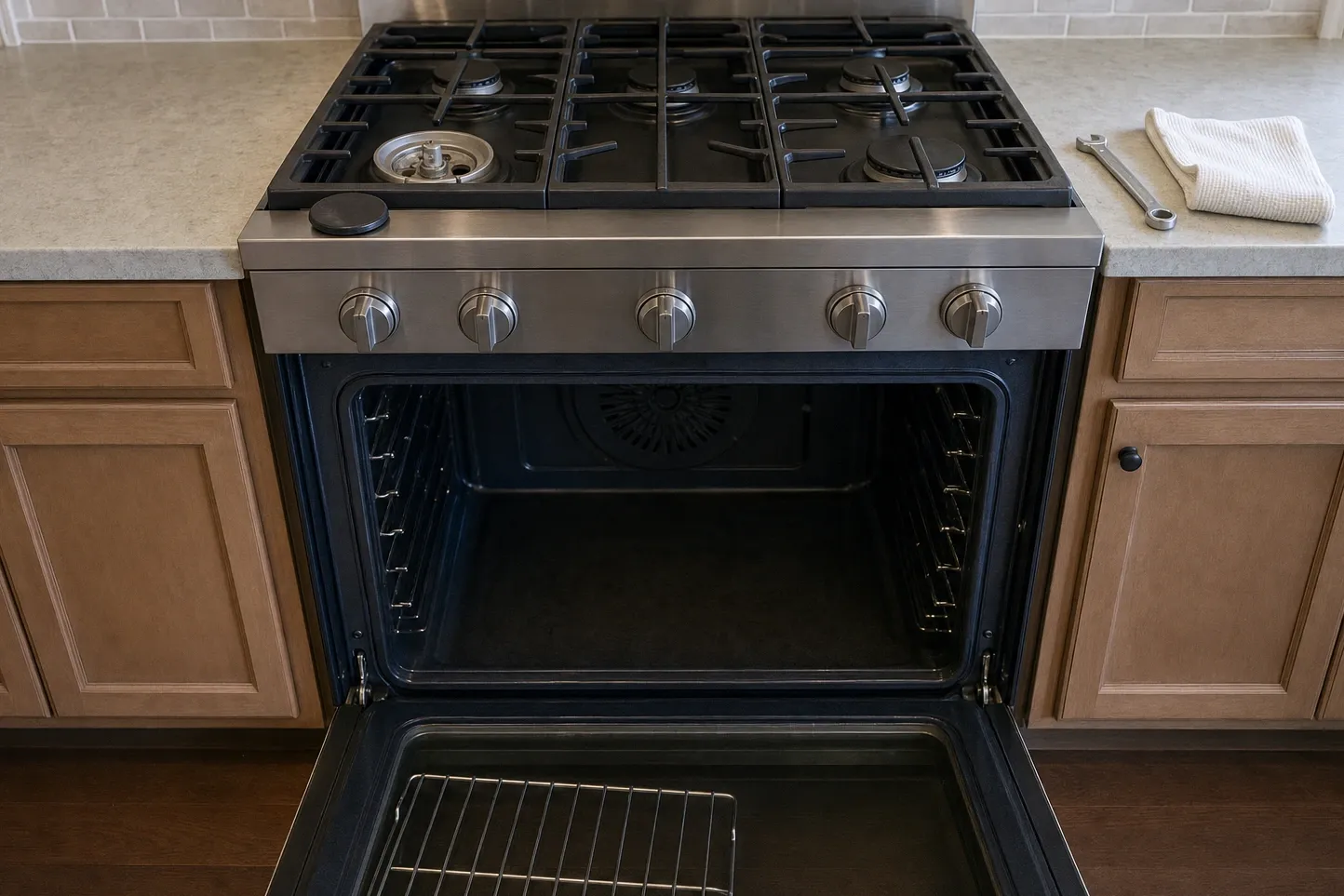
Taking a reading that means something
A dial thermometer standing on the centre rack, clear of the walls and of any pan, is the whole apparatus. Set a temperature you actually bake at, then ignore the preheat signal. Viking’s built-in ovens borrow partial power from the broil element to reach that first set point, so the cavity at the beep is hotter up top than it will be ten minutes later, and the guides ask you to keep food out until preheat has finished. Give it a further twenty minutes, then read the dial through the glass every five minutes for a quarter of an hour, writing each figure down. Opening the door to look empties the cavity and starts the exercise again.
What the average is telling you
Add the figures, divide, and compare that average with the dial — never the single highest or lowest. A cavity that swings either side of its set point while holding the average is a thermostat working. An average sitting well below the dial is the appliance, and it is worth keeping separate from the recipe: thin air changes what happens inside a cake, not what the cavity is able to reach.
| What the average shows | What it points at | What to do next |
|---|---|---|
| Average close to the dial | A thermostat cycling the way it was built to. Baking that still disappoints at this elevation is asking for a recipe change. | Adjust the recipe. Keep your figures in case the picture shifts. |
| Average well under the dial | A probe reading high, a weak element or burner, or heat escaping round a tired seal. All three look the same from a chair. | Book a visit and have the model and serial to hand. |
| Average right, swing very wide | Cycling that has lost its grip on the middle. An offset shifts the whole band and narrows nothing. | Ask for it to be measured before anything is adjusted. |
| Preheat much longer than it was | Heat arriving at a fraction of its rating, or leaving as fast as it arrives. | Time it, write the minutes down, and say so when you ring. |
Follow-ups
Where should the thermometer sit?
On the centre rack, in the middle, clear of the walls and of any tray. A thermometer lying on the floor of the cavity reads the element rather than the air, and Viking Pro Repair Denver would rather you rang (720) 790-9436 than trusted that.
Can I just change the offset myself?
Nothing stops you, and the change undoes itself just as easily, but take the measurements first. An offset moves every reading by the same amount, so a drift that varies with heat survives it. Viking Pro Repair Denver meters the probe instead, on (720) 790-9436.
How many cycles should I record before ringing?
Three settled readings at the same set temperature, taken on different days, are plenty. One afternoon can be thrown by a cold kitchen or a door opened once too often. Bring the average and the model number to Viking Pro Repair Denver on (720) 790-9436.